
Some of the most meaningful stories an organization can tell happen far from its headquarters: a health program in Sierra Leone, an education initiative in Ethiopia, a livelihoods project in Guinea. They’re also some of the hardest stories to film well. International production introduces a layer of logistical, cultural, and ethical complexity that doesn’t exist when you’re shooting an interview with a CEO in their office.
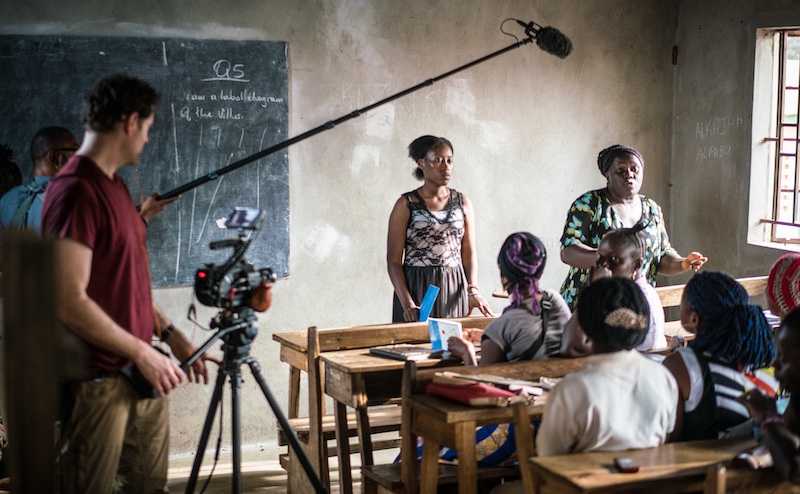
Over 20 years, we’ve produced films across Sierra Leone, Guinea, Liberia, Ethiopia, Mexico, Israel, Latin America, and beyond, for NGOs and global health and development organizations. Here’s what we think every communications team should know before moving forward with an international shoot.
1. Geography Shouldn’t Determine Whether a Story Gets Told, But It Does Determine How
Organizations often make one of two production choices in an effort to capture stories in the remote regions they work. They’ll choose to fly a full production team overseas, which is expensive and logistically heavy with all the visas, equipment carnets and filming permits required. Or, they choose to rely entirely on local staff with a phone camera. The latter is certainly cost-effective and light on logistics, but often lacking the visual and narrative craft needed for a donor-facing broadcast-quality piece. Neither is usually the right fit.
The better model is a hybrid one: a small core team that understands your organization’s story and standards, paired with a vetted network of local videographers, translators, and fixers who understand the country’s language and cultural context. This combination consistently produces work that’s both professionally crafted and authentic because an understanding of the local context opens access to tell the most powerful stories.
2. Consent and Representation Deserve Attention
When you’re filming program participants, particularly in communities facing poverty, displacement, illness, or conflict, informed consent is foundational to a project’s success. That means:
- Explaining, in the subject’s own language, exactly how the footage will be used (donor communications, social media, broadcast), not a vague blanket release
- Being honest with subjects about what they will and won’t get out of participating
- Avoiding “poverty porn” framing that reduces people to symbols of suffering rather than showing their agency, dignity, and complexity
- Involving local staff or partners in reviewing sensitive footage before it’s used publicly, since they’re often better able to catch context or framing issues an outside team might miss
Organizations that get this right tend to build trust with the communities they serve over multiple projects which also eases access and cooperation in the future.
3. Build and Plan For a Schedule That Will Shift
Visa processing times, in-country travel, filming permits, equipment import restrictions, unreliable power and internet access, and last-minute changes to program schedules on the ground are par for the course in international production. A realistic international shoot schedule builds in buffer days to account for a scheduled interview subject who doesn’t show up or a monsoon that blocks the road and delays travel.
Working with a production partner who has already navigated these logistics in-region, rather than learning them for the first time on your project, results in a more successful shoot, even if it’s not scene-by-scene what you have sketched out. We always tell clients that we plan for everything knowing that the plan will most-certainly change, and often in a way that results in more interesting stories . Years of experience telling stories overseas positions us to respond calmly to shifts in the plan and make wise creative pivots when needed.
4. Local Language and Context Fluency Means Access
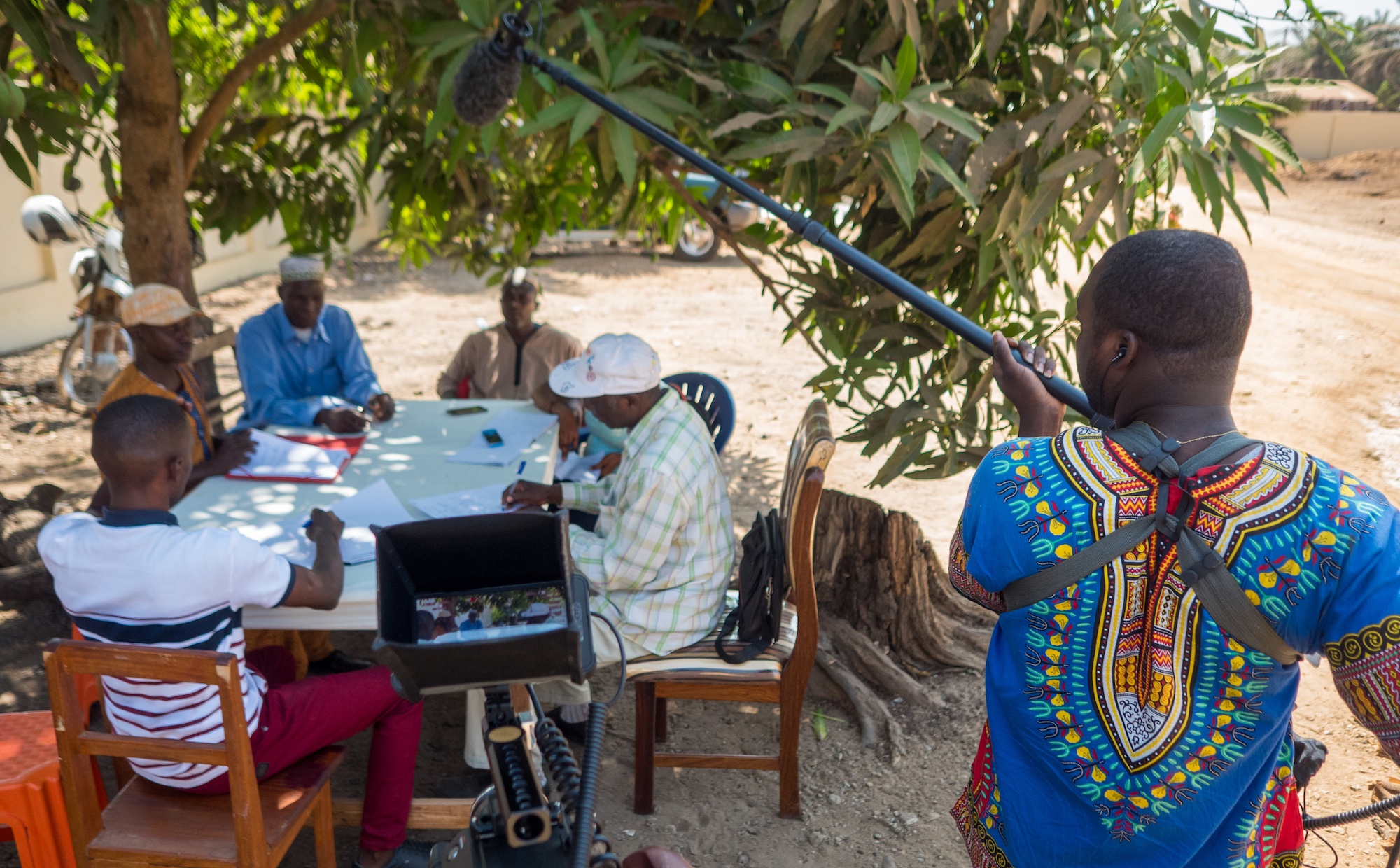
A crew that speaks the local language captures moments a purely foreign crew will miss entirely: the aside comment during a break, the joke that reveals a relationship, the moment of hesitation before an honest answer. This means they notice opportunities for filming that a foreign crew might not, and they instinctively know the strategies to capture a scene in difficult moments that might not be culturally appropriate for a foreigner. We think back to a moment in Guinea when Ben was filming in a hospital but the noise in the hallway was too loud to capture a scene between a provider and patient. The Guinean sound-mixer decided (unprompted) to snap his fingers and whistle to quiet the hallway crowd. Ben might consider the action rude but for the Guinean sound-mixer, it was a culturally appropriate way to get the job done.
5. Post-Production Needs a Cultural Check Too
The story doesn’t end when the crew comes home. Translation and subtitling need native-level accuracy after the literal translation has been given a quick pass for the purposes of editing. Tone and idiom matter. And it’s worth having someone with in-region context review the edit before it’s finalized, to catch anything that might read differently to a local audience than it does to a donor audience back home. We often ask our local production partners to assist with a translation QC pass before delivering the final version.
The Bottom Line
International storytelling does well when it treats “in-country” locations as a places with their own expertise and eco-systems. The organizations that produce the most powerful, most trusted international content are the ones that build real partnerships with people on the ground. Eidolon Films maintains a hand-picked global network of videographers, animators, and local production partners across Africa, Asia, the Middle East, and Latin America, combined with our own deep international shooting experience. Talk to us about your organization’s international storytelling needs, because geography should never be the reason your story doesn’t get told.

